
Germany’s Industrial Landscape & High-Precision Machinery Sourcing
Exploring the synergy between German engineering rigors, European regulatory frameworks (CE, VDE, DIN), and advanced fluid automation technology.
The German Mechanical Engineering Benchmark
Germany stands as the global epicenter for mechanical engineering excellence (Maschinenbau), defined by stringent DIN standards, micro-metric manufacturing tolerances, and the pioneering adoption of Industrie 4.0 connectivity. From the industrial hubs of Baden-Württemberg and Bavaria to major municipal infrastructure projects in North Rhine-Westphalia, German B2B buyers require equipment products that guarantee absolute hydraulic stability, zero failure rates in continuous operation, and seamless integration into automated building management systems (BMS).
In modern architectural fluid engineering, municipal waterscapes, and industrial liquid management, static systems have transitioned into dynamic, software-choreographed networks. Achieving synchronization across hundreds of high-pressure nozzles and multi-axis swing controllers demands mechatronic hardware that satisfies both European safety directives (Machinery Directive 2006/42/EC) and low-latency communication protocols.
Key Takeaway for B2B Procurement: Modern equipment sourcing in Germany is no longer solely about structural steel or pump head pressure—it centers on cyber-physical system (CPS) compatibility, predictive maintenance capabilities via IoT sensors, and total cost of ownership (TCO) optimization.
European Regulatory Compliance Matrix
- DIN 19643 Standard: Water treatment and hygienic filtration protocols for public and commercial aquatic features.
- VDE 0100 Safety Compliance: Strict electrical insulation standards for low-voltage underwater machinery and IP68 submersible enclosures.
- EU Machinery Directive 2006/42/EC: Mandatory mechanical protection, double-sealed actuators, and redundant safety shut-off valves.
- CE & RoHS Certification: Material traceability (AISI 304/316L stainless steel) ensuring resistance to harsh chemical treatments and environmental exposure.
Germany-Standard Precision Dynamic Actuators
Top-tier CNC swing controllers and motion hardware engineered for high-frequency dynamic water features and commercial installations.
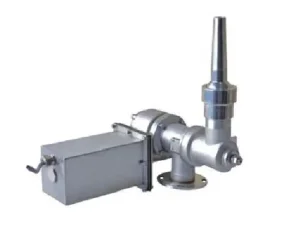
Germany-Grade Custom CNC Swing Actuator Module BLE CSN-40/50
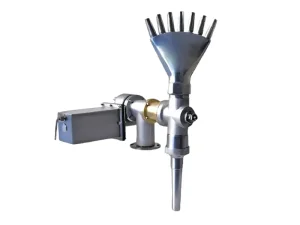
Precision CNC II Dual-Axis Instrument Swing System BLE CSN-40/50 for German Waterscapes
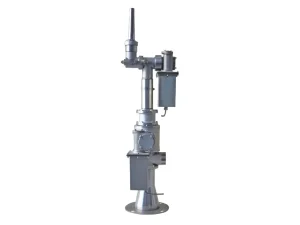
Multi-Axis Heavy-Duty CNC Swing Controller Equipment BLE CSN-65/50
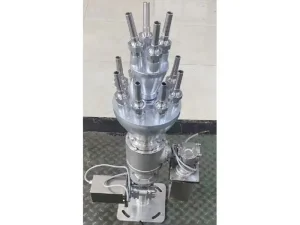
Architectural Kinetic Fluid Actuator Unit (Taiji Cloud Hand Series)
Technology Roadmap: IoT Edge & Fluid Digital Twins
How next-generation mechatronics and intelligent telemetry redefine operational reliability for complex commercial installations.
1. Cyber-Physical Digital Twin Simulation
Modern hydraulic design relies on CFD (Computational Fluid Dynamics) modeling combined with real-time digital twins. By running virtual simulations in ANSYS Fluent or OpenFOAM prior to physical deployment, engineering teams can precisely predict flow turbulence, pressure drops across complex nozzle manifolds, and mechanical friction inside swing gearboxes.
2. BLE Mesh Wireless Telemetry Nodes
Traditional hardwired fountain arrays require kilometers of copper cabling routed through subsea conduits, creating points of failure and labor-intensive maintenance. The integration of Bluetooth Low Energy (BLE) micro-controllers directly within actuators—such as the CSN series—enables secure, localized mesh networking. Operating status, motor temperature, vibration harmonics, and water ingress alerts are broadcast continuously to central control terminals.
3. Eco-Friendly Power & Water Conservation
European sustainability targets require drastic energy reductions. Advanced equipment products incorporate permanent magnet synchronous motors (PMSM) driven by Variable Frequency Drives (VFDs). This dynamic throttling reduces power consumption by up to 34% during off-peak show cycles while maintaining fluid discharge velocity.
R&D Roadmap Focus: Development of zero-maintenance magnetic drive couplings, self-healing IP68 elastomer seals, and AI-driven automated choreography software that auto-syncs water dynamics with ambient audio frequencies.
- Ultra-Low Latency: Sub-5ms response time across 128 networked swing nodes.
- Predictive Maintenance: Real-time vibration analysis flagging gear wear before operational breakdown.
- Modular Scalability: Plug-and-play expandability for multi-stage municipal installations.
Macro Industry Solutions for Commercial & Municipal Infrastructure
Tailored hydraulic and mechatronic engineering configurations designed to solve complex site challenges across European urban landscapes.
Municipal Public Plazas
Dry-deck (underground) fountain systems engineered for heavy pedestrian traffic, requiring low-voltage 24V DC operation, flush-mounted stainless steel grates, non-slip surfaces, and zero-odor closed-circuit water recirculation built to DIN 18035 standards.
Commercial Atriums & Malls
High-density Digital Water Curtains serving as interactive indoor architectural centerpieces. Incorporating micro-solenoid valve arrays capable of cutting water droplets 120 times per second to project graphics, logos, and dynamic text patterns.
Lake & Waterfront Shows
Large-scale floating platform arrays equipped with heavy-duty multi-axis swing nozzles, water screen video projection systems, and integrated gas-explosion fire effect modules engineered to withstand variable water levels and wind loads.
Localized Support & Compliance Assurance
Bridging global manufacturing efficiency with localized European logistics, engineering support, and stringent quality control.
Rapid Spare Parts & Technical Dispatch
For municipal contractors and project developers in Germany, operational downtime is unacceptable. Our dual-hub service structure pairs factory-direct production with expedited air-freight logistics for critical components, ensuring replacement actuators, solenoid coils, or driver boards arrive within accelerated timelines.
Every piece of equipment is shipped with standardized replacement kits, detailed schematics in English and German, and comprehensive CAD/BIM models for effortless integration into architectural software workflows (Revit, AutoCAD).
Comprehensive Quality Protocols
- 100% Hydrostatic Pressure Testing: Every nozzle manifold and valve housing undergoes 1.5x working pressure hold tests prior to packaging.
- 72-Hour Submersed Burn-In: Actuators and BLE modules operate continuously underwater to verify thermal stability and sealing integrity.
- Spectrometric Material Verification: Stainless steel components (AISI 304/316L) are XRF-tested to guarantee zero risk of premature corrosion.
China Factories 4.0: Supply Chain Resilience & Efficiency
Combining advanced multi-axis CNC machining, lean production lines, and economies of scale to deliver premium equipment at competitive prices.
Precision Production Infrastructure
Our manufacturing base leverages state-of-the-art 5-axis CNC turning centers, automated laser cutting machines, and robotic welding cells. By standardizing component sub-assemblies across 500+ dynamic water feature products, production lead times are reduced by up to 40% compared to traditional European custom fabrication shops.
Agile OEM/ODM Co-Engineering
We work directly with German engineering offices, system integrators, and fountain contractors to provide OEM and ODM manufacturing services. Whether custom voltage ratings (400V 50Hz EU standard), specialized mounting flanges, or custom signal communication protocols (DMX512-A, Art-Net, Modbus RTU) are required, our R&D engineering team adapts hardware designs within days.
Total Cost of Ownership (TCO) Advantage
By eliminating middle-tier trading markups and consolidating complete fluid-mechatronic manufacturing under one roof, global procurement teams realize significant capital savings. These cost efficiencies allow project developers to allocate greater resources toward design aesthetics and audiovisual content.
Supply Chain Security Guarantee: Raw material buffers (marine-grade stainless steel, copper windings, silicone gaskets) guarantee stable pricing and uninterrupted production schedules, even during global supply disruptions.
Global Enterprise Sourcing: Specifying Equipment Products
A structured technical guideline for EPC contractors, landscape architects, and commercial buyers specifying hydraulic and dynamic motion components.
Step 1: Hydraulic & Mechanical Load Calculation
Calculate required head pressure (mH2O), volumetric flow rate (L/min per nozzle), and angular torque requirements for swing mechanisms under dynamic wind loading. Ensure motor wattage matches duty cycles without exceeding thermal dissipation limits.
Step 2: Signal Protocol & Power Standard Alignment
Confirm control compatibility: DMX512-A for high-speed dynamic show sync, Modbus/PROFINET for industrial BMS monitoring, or BLE mesh for wireless setups. Verify local grid requirements (e.g., 400V AC 3-phase 50Hz in Germany/EU vs. 480V 60Hz in North America).
Step 3: Material & Environmental Specification
Select AISI 316L stainless steel for marine, saline, or heavily chlorinated pool environments. Specify IP68 hermetically sealed junction boxes, fluororubber (FKM) gaskets for chemical longevity, and UV-stabilized polyurethane cabling.
Step 4: Lifecycle Maintenance & Warranty Planning
Require manufacturer compliance certificates, 3D CAD step files, spare parts availability guarantees (minimum 10-year component supply policy), and extended multi-year factory warranties for critical drive mechanisms.
Industrial & Municipal Equipment Product Lineup
Factory-direct fluid mechanics, intelligent fire monitoring, digital curtains, and dynamic waterscape modules engineered to global standards.
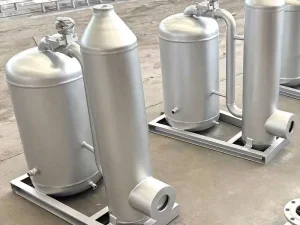
High-Pressure BLE Controlled Gas Explosion & Spark Effect Unit
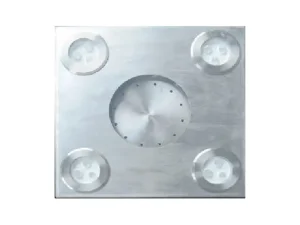
High-Precision CNC Flower Basket Dynamic Nozzle System BLE CSN-50
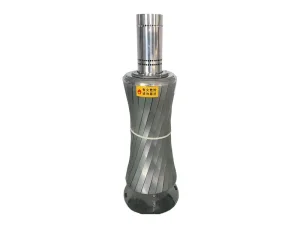
Industrial BLE Intelligent Fire & Thermal Safety Monitoring System CSN-Fire
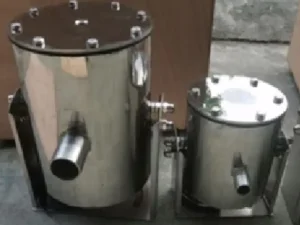
Laminar Jet & Boguang Spring Dynamic Fluid Controller
Glass Light Dancing Fountain Mechanical Component Array
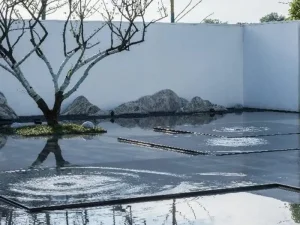
OEM Precision Micro-Ripple Generation Device for Architectural Waterscapes
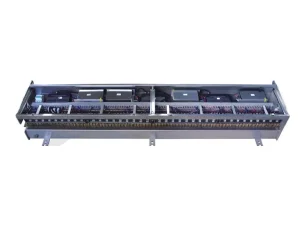
High-Resolution Integrated Digital Water Curtain System for German Facilities
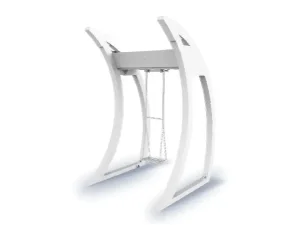
Heavy-Duty OEM Water Curtain Swing Integrated Module
Frequently Asked Engineering Questions
Direct answers regarding European compliance, BLE control integration, OEM customization, and lead times for German projects.
How do BLE-enabled CNC swing devices integrate with existing European SCADA/Siemens control systems?
Our BLE CSN series actuators feature hybrid communication interfaces. While local mesh telemetry and rapid commissioning can be managed wirelessly via BLE, the main control cabinets integrate standard industrial gateways (PROFINET, Modbus TCP/RTU, or DMX512-A). This allows direct PLC handshake with Siemens S7-1200/1500 controllers or existing building management systems (BMS), maintaining centralized oversight while retaining wireless diagnostic telemetry.
What certifications and compliance standards do your equipment products meet for installation in Germany and the EU?
All equipment products exported to Germany fully comply with the CE Marking standards under the Machinery Directive 2006/42/EC, Low Voltage Directive 2014/35/EU, and EMC Directive 2014/30/EU. Submersible motors and underwater junction boxes carry IP68 rating certificates verified by independent lab testing. Materials adhere to EU REACH and RoHS environmental standards, with AISI 304/316L stainless steel options available for DIN 19643 public water feature compliance.
How does the China Industry 4.0 manufacturing model offer cost advantages without compromising precision engineering?
Our facility combines automated 5-axis CNC machining, lean assembly robotics, and direct raw-material supply integration in China’s premier manufacturing hubs. By standardizing internal gearboxes, motor drives, and electronic housings across a large volume of international projects, we lower per-unit overhead by 35-45% compared to boutique European fabricators. Quality is strictly maintained via 100% hydrostatic, dielectric, and 72-hour burn-in testing protocols prior to dispatch.
What are the key maintenance cycles and operating lifespans for CSN series dynamic fluid actuators?
CSN series CNC swing units are engineered for a MTBF (Mean Time Between Failures) exceeding 50,000 operational hours. Internal mechanical components use self-lubricating composite bushings and double-lip fluororubber (FKM) seals. We recommend routine external seal inspection and seal replacement every 24 to 36 months depending on water quality, mineral content, and duty cycles.
Can equipment products be customized for harsh winter environments in Northern/Central Europe?
Yes. For climates subject to freezing conditions (down to -25°C), we supply customized equipment variants featuring automated winterization drain ports, internal low-wattage anti-freeze heating elements for dry-installed actuator housings, and cold-resistant polyurethane cabling rated to -40°C.
What is the typical lead time for custom OEM/ODM fountain equipment delivered to Germany?
Standard catalog units (such as CSN-40/50 swing units and standard nozzles) ship within 7 to 14 working days. Custom OEM/ODM designs requiring specialized mounting brackets, bespoke valve manifolds, or modified electrical specifications typically require 21 to 30 days for engineering design, CNC fabrication, and full factory testing. Air freight delivery to Germany takes 5-7 days, while sea freight takes 28-35 days to major ports such as Hamburg or Bremerhaven.
Partner with a Special Grade Equipment Manufacturer
Whether you are designing a municipal landmark in Germany or integrating smart fluid mechatronics into a commercial development, our engineering team provides complete technical proposals, CAD/BIM models, and factory-direct pricing.
Send Inquiry Now