
Featured Underwater Lighting & Water Show Components
Precision-engineered hardware developed to satisfy stringent international engineering standards for municipal and commercial waterscapes.
The Technological Evolution of Submersible Fountain Lighting
From simple monochrome illumination to high-density, multi-spectrum, intelligent LED networks engineered for aquatic resilience.
Solid-State Efficiency & Spectral Purity
Legacy fountain installations relied heavily on halogen or incandescent lamps, suffering from parasitic thermal losses, fragile seals, and frequent lamp replacements. Modern OEM submersible LED luminaires utilize chip-on-board (COB) and high-power Surface Mount Device (SMD) arrays from industry leaders such as CREE and OSRAM. Delivering optical efficiency exceeding 120 lm/W, today's underwater luminaires provide precise monochromatic saturation and seamless RGBW/RGBA full-spectrum color mixing without thermal runaway.
DMX512/RDM & Dynamic Network Control
The rapid convergence of architectural lighting and choreographic multimedia shows has elevated control requirements. Modern OEM submersible lights incorporate advanced digital communication interfaces featuring DMX512-A and RDM (Remote Device Management) protocols. This enables real-time bidirectional telemetry—allowing site operators to remotely monitor diode operating temperatures, power consumption, and voltage stability across thousands of discrete fixtures across large lake installations.
Thermodynamic & Hydrodynamic Engineering
Operating electronics in underwater conditions presents unique physical challenges. Water acts as a natural heat sink, yet dry-run periods during maintenance can instantly destroy improperly cooled LED engines. Advanced OEM fountain fixtures feature dual-chamber thermodynamic housing design, utilizing high-purity die-cast 316L stainless steel or specialized copper alloys coupled with structural polyurethane potting resin to prevent vacuum pressure moisture ingress.
Global Procurement Criteria for EPC Contractors & Specifiers
Key technical parameters and international compliance certifications required when sourcing submersible lighting hardware for large-scale municipal projects.
Ingress Protection & Structural Sealing
True IP68 compliance requires more than standard liquid silicone gaskets. Premier OEM manufacturers execute multi-stage structural sealing:
- Full Internal Resin Potting: Encapsulating the LED PCB board and driver in optical-grade thermally conductive epoxy resin eliminates internal air gaps and prevents moisture condensation caused by temperature differentials.
- Anti-Siphon Cable Glands: Water can seep through damaged cable jackets via capillary action. Factory-molded vulcanized cable joints with internal barrier blocks guarantee water block isolation up to 10 Bar hydrodynamic pressure.
- Tempered Optical Glass: High-transmission, thermal-shock-resistant step-tempered glass (8mm to 15mm thickness) prevents fracture under high-pressure water column impacts from adjacent fountain jets.
Electrical Safety & Voltage Standards
Safety is paramount in public waterscapes and interactive dry-deck installations where human contact is frequent:
- SELV (Safety Extra-Low Voltage) Operation: Compliance with IEC 60598-2-18 standards dictates that underwater luminaires must operate strictly under Class III Safety Extra-Low Voltage thresholds (12V DC or 24V DC).
- Electromagnetic Compatibility (EMC): Integrated switching circuits must pass rigorous CE, RoHS, and FCC tests to ensure zero RF interference with underwater wireless sensors, wireless DMX receivers, or audio transmission systems.
- Over-Current & Thermal Cut-Off: Smart driver topologies incorporate auto-resetting thermal sensors that automatically dim output if internal ambient temperatures exceed 75°C during dry testing.
Macro Technical Solutions for Diverse Waterscapes
Tailoring optical, mechanical, and electrical configurations to match distinct physical environments.
Large-Scale Musical Lakes & Rivers
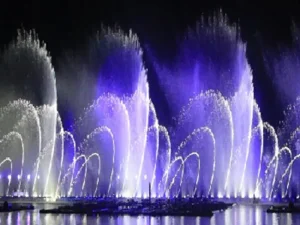
Natural water bodies feature fluctuating water levels, bio-fouling, and silt accumulation. Solutions utilize floating platform lighting rigs, high-lumen narrow-beam optics (8° to 15° spot angles) to punch through 30-meter high water columns, and electro-polished 316L anti-fouling steel enclosures resistant to organic growth and mineral deposits.
Interactive Dry Deck Plazas
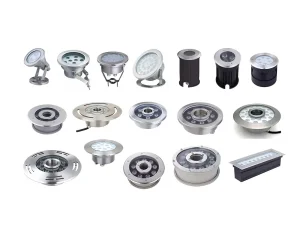
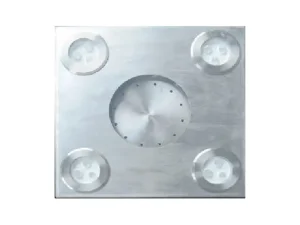
Demands flush-mount stainless steel donut-shaped luminaires with central nozzle pass-through holes. Equipped with heavy-duty drive-over anti-slip tempered glass frames capable of sustaining pedestrian loads and vehicle weight up to 30 kN, combined with low-voltage 24V DC human-safe electrical circuits.
Digital Water Curtains & Indoor Atriums
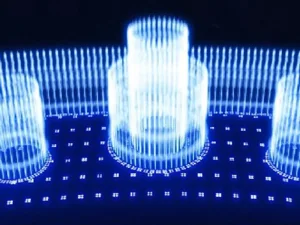
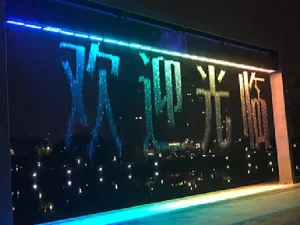
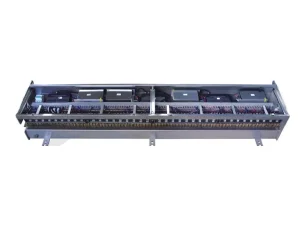
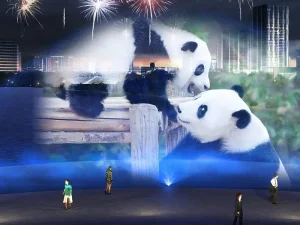
Requires ultra-fast strobe responsiveness to illuminate micro-droplets printing high-resolution logos and text. Uses specialized linear light bars with custom elliptical optics (15° x 60°) and high PWM frequency drivers (>4,000 Hz) to guarantee flicker-free performance under HD broadcast camera cameras.
End-to-End OEM/ODM Manufacturing & Quality Engineering
Empowering global distributors, lighting designers, and EPC contractors with bespoke manufacturing flexibility.
Optical Customization
Custom beam spreads ranging from 8° ultra-narrow spotlights to 120° wide flood optics, asymmetrical lenses, and custom color spectrums (RGBW, RGBA, Tunable White 2700K-6500K).
Mechanical Tailoring
Custom CNC machining for specialty bracket mountings, housing alloy selection (304, 316, 316L Stainless Steel, Titanium anodized finishes), laser-etched branding, and custom bezel shapes.
Protocol Integration
Tailored electronics supporting native DMX512-A, RDM, Art-Net to DMX conversion, 0-10V analog dimming, or proprietary wireless Bluetooth Low Energy (BLE) control modules.
Compliance & QC
100% helium mass spectrometer leak testing, 24-hour underwater pressure chamber aging tests, spectral goniophotometer color consistency reporting, and ISO9001 certified batch tracking.
Technological Roadmap: Next-Gen Submersible Systems
Pioneering smart innovations to reduce maintenance overhead while pushing artistic boundaries in aquatic show design.
AI-Driven Chromatic Synchronization
Integration of edge-computing chips directly within driver enclosures. Embedded neural algorithms analyze live acoustic frequencies from musical tracks, automatically synthesizing harmonized lighting color schemes and rapid strobing without requiring laborious manual frame-by-frame show programming.
Self-Cleaning Hydrophobic & UV Optics
Nanoscale hydrophobic glass coatings combined with micro-wavelength UV-C LED emitters positioned around optical lenses. This passive system eliminates bio-film, scale buildup, and algae adhesion, extending field maintenance intervals from months to years in outdoor lake environments.
Ultra-Low Latency Mesh Networking
Transitioning from traditional copper signal cables to hybrid optical-wireless underwater RF/optical communication networks. Built-in Bluetooth Low Energy (BLE) and optical mesh nodes dramatically reduce wiring complexity, copper weight, and installation labor for floating musical fountains.
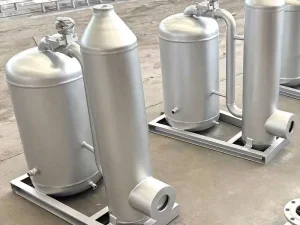
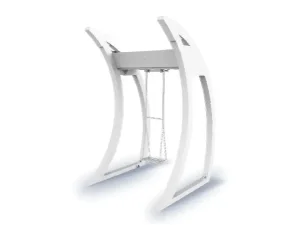
Specialized Fountain & Special Effects Hardware
Precision mechanical units, fire/water combination effects, and CNC motion systems engineered for seamless integration.
Frequently Asked Technical & Procurement Questions
In-depth answers curated by senior aquatic engineers and technical consultants to support project planning.