
Featured OEM Hydraulic & Special Effects Hardware
Industrial-grade fountain components engineered for long-term operational resilience, high-precision dynamic movement, and seamless integration with smart DMX512/EtherCAT control networks.
-
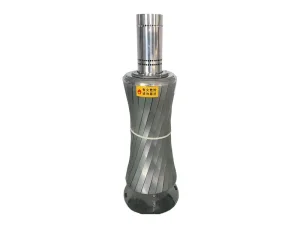
High-Quality BLE-Enabled Intelligent Fire Monitoring Equipment: CSN-Fire Suppliers, Factory
-
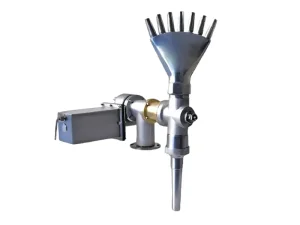
High-Quality CNC II instrument swing equipment BLE CSN-40 / 50 Manufacturers, Supplier
-
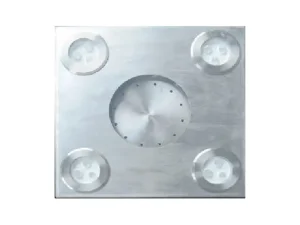
High-Quality CNC flower basket equipment BLE CSN-50 Manufacturers, Factories
-
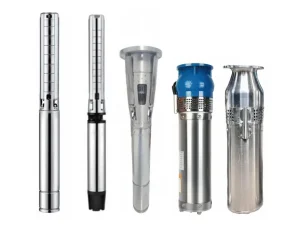
OEM SP/DP/QSP Series Submersible Electric Pumps for Fountains Manufacturers, Suppliers
-
-
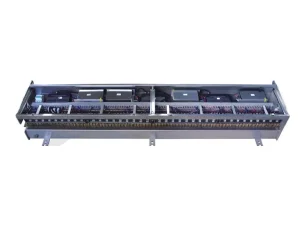
High-Quality Digital water curtain integrated equipment Factories, Factory
-
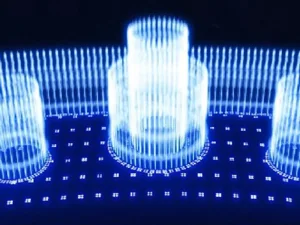
OEM Musical Fountain -- Customized Service Manufacturers, Manufacturer
-
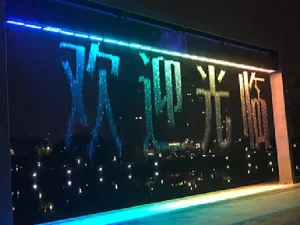
High-Quality Digital water curtain--customized service Manufacturers, Manufacturer
Global Commercial & Industrial Status: The Evolution of Architectural Waterscapes
The global market for commercial outdoor fountains has undergone a paradigm shift from static decorative water basins to dynamic, IoT-controlled, multi-sensory entertainment destinations.
Commercial Real Estate & Public Urban Dynamics
Modern commercial infrastructure demands landscape features that convert passive public foot traffic into active economic dwell time. High-density urban plazas, luxury lifestyle centers, and municipal waterfront developments utilize automated musical fountains and digital water walls as central visual anchors. In regions undergoing massive urban expansion—such as the Middle East, Southeast Asia, and Latin America—large-scale outdoor fountains are treated as critical civic infrastructure that elevates land valuations, increases retail tenant revenues, and creates iconic municipal landmarks.
Convergence of Hydraulics, Lighting, and Digital Choreography
Today’s architectural water features are complex mechatronic systems. Standard static spray nozzles have been largely superseded by high-speed CNC multi-axis swing mechanisms, digital solenoid water curtains, integrated flame-on-water units, and high-lumen RGBW LED underwater illuminators. Engineering teams must ensure absolute synchronicity between sub-second hydraulic response times, audio bitstreams, and DMX512/RDM lighting control networks. Achieving this level of precision requires deep OEM engineering integration right from the factory floor.
Localized Application Scenarios & Engineering Adaptations
Deploying outdoor commercial fountains across distinct geographic and climatic zones demands specialized engineering adaptations to overcome environmental stressors and regional operational requirements.
Municipal Plazas & Dry Deck Fountains
Designed for zero-depth public interaction, dry deck (interactive floor) fountains utilize sub-surface stainless steel trenches covered by load-bearing granite or stainless steel grates. Key engineering requirement: Fast-acting IP68 solenoid valves paired with flush-mounted anti-stumble nozzles. Automated filtration units must integrate multi-stage UV sterilization and real-time chlorine dosing to satisfy municipal public safety and hygiene mandates.
High-Salinity Coastal Promenade Installs
Coastal developments face aggressive atmospheric and aquatic corrosion. Standard 304 stainless steel fails rapidly in hyper-saline marine environments. OEM manufacturing specs for coastal zones require full AISI 316L stainless steel construction, titanium-alloy mechanical seals for submersible pumps, and specialized fluorocarbon (PTFE) anti-corrosion coatings on all underwater junction boxes and CNC swing assemblies.
Arid & High-Temperature Desert Resorts
In regions like the GCC, summer ambient temperatures exceed 50°C, causing extreme surface water evaporation and thermal stress on electronics. OEM installations deploy automated liquid level control systems, continuous water makeup manifolds, and external fluid heat exchangers for submersible pump chambers. Control cabinets feature dual-circuit industrial air conditioning units to protect PLC hardware from thermal shutdown.
Freezing Climate Municipal Parks
Installations in Northern Europe or North America require winterization engineering. Systems are built with automatic pipe network blow-down valves driven by compressed air, angled hydraulic drain lines, and submersible pump sumps fitted with low-wattage heating elements to prevent ice lock and structural casing fractures during sub-zero shutdowns.
Indoor Atriums & Luxury Hospitality
Indoor water walls and digital water curtains require absolute hydraulic containment and silent mechanical operation. Submersible pumps are swapped for variable-frequency-driven (VFD) canned motor pumps isolated with acoustic rubber dampers. Hydraulic distribution manifolds feature micro-bubble deaeration units to prevent splashing and ensure whisper-quiet, uniform water streams.
Technical Roadmap & Future Outlook: Next-Gen Waterscape Automation
The technological trajectory of commercial water displays is heavily linked with advances in industrial automation, spatial computing, and environmental fluid dynamics.
1. High-Precision BLE & Bus-Controlled Dynamic Actuators
Legacy mechanical link-arm systems are being systematically replaced by direct-drive, brushless DC (BLDC) servo-actuated CNC swing mechanisms. By embedding Bluetooth Low Energy (BLE) and RS485/CAN-bus communication protocols directly into individual drive housings (such as the CSN-40/50 series), each nozzle unit operates as an autonomous node on a decentralized control network. This enables multi-axis rotational freedom, absolute position feedback with 0.1-degree accuracy, and instant fault detection via central diagnostic software.
2. AI Choreography & Real-Time Audio-Hydraulic Mapping
Traditional musical fountain programming required hundreds of manual engineering hours to script valve sequences to audio tracks. Next-generation systems integrate AI-driven music spectral analysis algorithms. The software automatically parses complex musical arrangements—analyzing tempo, frequency spectrum, dynamic transients, and vocal stems—and generates mathematically optimized hydraulic valve commands and RGBW color palettes in real-time.
3. Closed-Loop Hydro-Eco Systems & Energy Efficiency
Energy consumption remains a critical operational metric for large-scale municipal fountains. Future-ready installations incorporate variable speed permanent magnet synchronous motors (PMSM) within submersible pumps, reducing electrical draw by up to 35% compared to traditional induction pumps. Hydraulic CFD (Computational Fluid Dynamics) modeling is utilized during nozzle manufacturing to minimize internal fluid friction, enabling higher water jet throws with lower pump kilowatt ratings.
4. Mixed-Reality Projection & Multi-Element Convergence
Water screens are transitioning from flat 2D projection surfaces to layered volumetric visual setups. Modern light and water shows integrate high-output 30,000-lumen laser projectors, high-frequency fire-jet devices (CSN-Fire units), dynamic fog-generator arrays, and aerial drone swarms into unified timeline protocols via SMPTE timecode sync.
China Factory Supply Chain Resilience & Manufacturing Engineering
Sourcing direct from specialized Chinese OEM fountain factories provides global engineering firms and developers with distinct cost, scalability, and technical advantages.
Vertical Industrial Cluster
Chinese fountain manufacturing hubs combine raw material casting, precision 5-axis CNC machining, electronic PCB assembly, motor winding, and waterproof sealing within tight geographical clusters. This localized supply chain reduces hardware component lead times from months to weeks.
Factory Acceptance Testing (FAT)
Before dispatch, complete fountain manifolds, CNC swing devices, and control cabinets undergo rigorous wet-testing in factory test basins. Pressure profiles, electrical insulation resistance, IP68 seal integrity, and DMX address mapping are verified and recorded digitally for the client.
Modular Structural Engineering
To reduce international freight logistics costs and speed up field assembly, OEM equipment is engineered into standardized, pre-wired, skid-mounted modular frames. Sub-assemblies fit neatly into standard 20ft/40ft HQ shipping containers with quick-connect stainless flanges and IP68 military-spec plug connectors.
Localization Support, Technical Compliance & Safety Standards
Navigating international electrical codes and structural standards is vital for project approval and public safety in municipal infrastructure.
Electrical & Power Grid Adaptation
OEM factories engineer control cabinets and submersible equipment tailored specifically to destination electrical standards. This includes multi-voltage transformers and VFDs accommodating 110V/220V/380V/480V grid inputs at both 50Hz and 60Hz frequencies. Control systems feature residual current circuit breakers (RCCB), surge protection devices (SPD), phase-loss protection, and isolation transformers to guarantee absolute ground fault safety in public swimming or interactive zones.
Global Certification & Installation Field Teams
Equipment is manufactured in alignment with global safety benchmarks, including CE, UL, IEC 60364-7-702 (requirements for basins and fountains), and IP68 ingress protection codes. To support overseas contractors, Tier-1 OEM suppliers offer comprehensive BIM/CAD shop drawings, 3D hydraulic piping diagrams, and on-site dispatch of experienced commissioning engineers for field installation supervision and operator training.
Precision Nozzle Assemblies, Swings & Lighting Systems
Complete your custom commercial waterscape spec with factory-direct nozzles, high-torque dynamic swing actuators, specialty effect systems, and underwater LED luminaires.
-
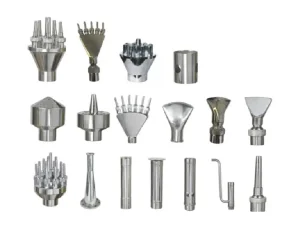
-
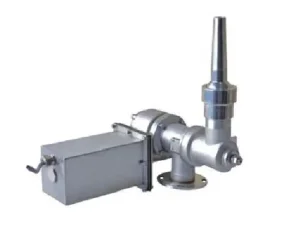
Custom CNC swing equipment BLE CSN-40 / 50 Manufacturer, Supplier
-
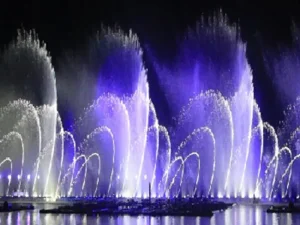
OEM Light and water show--customized service Manufacturers, Suppliers
-
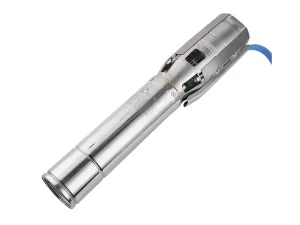
High-Quality Servo Submersible Pump Manufacturers, Manufacturer
-
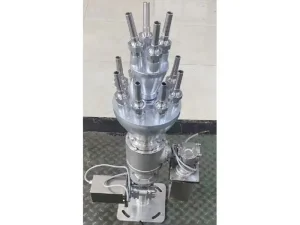
-
Custom Glass light dancing fountain equipment Suppliers, Factories
-
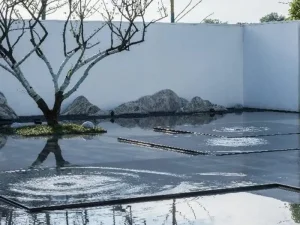
OEM Ripple Device: Precision Instrument for Waterscapes Manufacturer
-
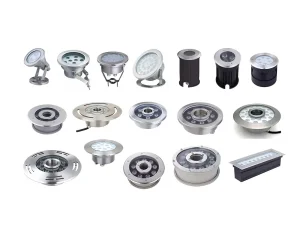
OEM Underwater lighting series: Professional Lighting Manufacturers
Technical Procurement FAQ & Architectural Engineering Guidance
Essential considerations for EPC contractors, landscape architects, and municipal procurement teams when specifying commercial outdoor water features.