
Engineered Water Feature Lighting & Motion Systems
Factory-direct submerged illumination assemblies, robotic actuation units, and digital hydrodynamic nozzles manufactured to international safety standards.
Global Commercial Status of Aquatic Lighting Engineering
Underwater solid-state lighting has transitioned from static pool illumination to multi-spectral, synchronized dynamic photonics integrated into municipal infrastructure.
The worldwide market for custom water feature LED lighting and architectural waterscapes has undergone rapid technological shifts over the past decade. Previously dominated by halogen and incandescent luminaires that incurred prohibitive maintenance costs, thermal stress, and elevated energy consumption, modern aquatic environments mandate ruggedized solid-state LED systems. Driven by the expansion of nighttime cultural tourism, municipal revitalization initiatives, and high-density commercial mixed-use developments, underwater LED fixtures must satisfy both rigorous photometric requirements and harsh chemical environments.
Engineering aquatic luminaires is fundamentally a discipline of extreme boundary conditions. Unlike conventional exterior floodlighting, water feature fixtures operate under relentless hydrostatic pressures, cyclic thermal loads, dissolved mineral contents, and exposure to corrosive biocides such as chlorine, ozone, or saline agents. Industrial purchasers and specifiers require verified IP68 ingress integrity, robust galvanic isolation, and structural thermal management where cooling relies either on ambient aquatic dissipation or internal forced heat piping. As an authoritative manufacturer certified with Special Grade credentials, our manufacturing lines bridge this gap by synthesizing optoelectronics with heavy hydraulic engineering.
Hermetic Hydrostatic Sealing
Multi-stage vulcanized silicone profiling, vacuum resin encapsulation, and precision CNC-milled structural flanges prevent capillary fluid breaches across extended duty cycles.
Thermal Dissipation Dynamics
Direct-to-casing thermal bonding and integrated phase-change heat conduction utilize ambient water as a natural thermodynamic heat sink, sustaining LED junction temperatures below 65°C.
Precision Water Optometrics
Custom-engineered collimator lenses and internal anti-refraction coatings counteract light scattering, maintaining high-candela beam punch across dense airborne mist and high-velocity fountain columns.
Technological Trajectories in Custom Underwater Luminaires
Evaluating the shift from standard low-voltage analog fixtures to software-defined, network-monitored intelligent lighting arrays.
RDM Telemetry Monitoring
Bidirectional Remote Device Management (ANSI E1.20) protocol allows real-time diagnostics of internal core temperatures, moisture ingress alerts, and voltage fluctuations without draining basins.
Micro-Narrow Beam Throw
Integration of 3-degree to 8-degree narrow-angle TIR (Total Internal Reflection) optics enables lighting arrays to illuminate 80-meter vertical water columns without excessive ambient light spill.
Multi-Spectral Dynamic Mixing
5-in-1 and 6-in-1 RGBAW-UV emitters yield broader color gamuts, delivering true warm pastels and vivid saturated tones suited for dynamic water projection screens.
PWM Line-Filtering Technology
High-refresh pulse width modulation (PWM > 25,000 Hz) eliminates video flickering across high-speed cameras, 4K livestream broadcasts, and high-definition water movie projections.
The Technological Roadmap: 2026 to 2030
Ultra-Durable Metallurgies
Standardization of SUS316L, 904L, and titanium housing options for high-chlorine and marine waterfront projects.
Integrated Driver-on-Board (DOB)
Elimination of external bulky driver cabinets; localized sub-surface DC-to-DC conversion with surge containment up to 10kV.
Art-Net / sACN Direct Nodes
Direct Ethernet-to-fixture mapping, drastically simplifying field wiring topologies on mega-scale municipal lake projects.
Self-Balancing Color Sensors
Autonomous photonic calibration modules adjusting chromatic output based on turbidity and chemical shifts in water.
Engineered Scenarios for Aquatic Lighting Applications
Tailoring hydrodynamic configurations, ingress tolerances, and photonic distributions to specialized real-world installation environments.
Dry Deck & Interactive Plazas
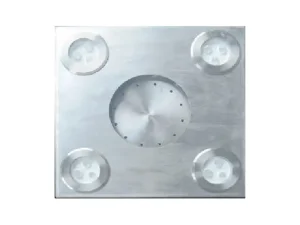
Flush-mounted walk-over LED lights engineered with 12mm tempered safety glass, load-bearing frames rated up to 5,000 kg, anti-slip surface treatments, and low-voltage DC24V operation to guarantee complete pedestrian and child safety in public open spaces.
Natural Lakes & Tidal Reservoirs
Submersible luminaires mounted to floating platform systems. These systems utilize specialized mooring flex-cables, high-grade anti-algae silicone lenses, and anti-corrosive copper/stainless composite housings engineered to accommodate shifting water elevations.
Indoor Commercial Atriums & Hotels
Ultra-quiet, zero-electromagnetic-interference (EMI) luminaires paired with precision digital water curtains. Engineered for tight optical cut-offs, zero architectural glare, and silent solid-state PWM dimming to preserve hospitality acoustics.
Extreme Climate Sub-Zero Basins
Freeze-resistant housing profiles built with internal expansion joints and optional low-draw heating traces to mitigate ice formation around delicate optic bezels and motor pivot mechanisms in cold-region operations.
Coastal & Saline Waterfronts
High-grade marine solutions utilizing electrolytic passivated 316L or titanium alloy bodies, sacrificial zinc anodes, and double O-ring Viton seals that resist accelerated chloride-induced pitting and galvanic corrosion.
Theme Parks & Staged Water Shows
High-speed, millisecond-responsive DMX512 luminaires aligned with robotic CNC swing nozzles and air explosion devices, delivering synchronized flashes, chase effects, and strobe accents matching rapid musical tempos.
Comprehensive Engineering: From Hydraulics to Photons
How our integrated factory ecosystem eliminates project delivery friction across civil, electrical, and show control stages.
Procuring water feature lighting systems from unspecialized assembly vendors often creates persistent operational problems. General commercial landscape lighting frequently suffers catastrophic failure when submerged indefinitely in deep water or exposed to the vibration forces generated by high-power submersible pumps. Bolier addresses these vulnerabilities by adopting a single-source manufacturing and engineering model. Since 2007, our Chengdu facilities have unified hydraulic calculation, mechanical articulation design, and specialized submersible luminaire assembly under audited quality regimens.
Civil & Foundation Coordination
We supply complete CAD/BIM conduit layouts, pre-embedded sleeve drawings, and niche dimensions, eliminating expensive on-site core drilling or waterproofing modifications during concrete pours.
Harmonic Isolation & Power Security
Submerged electrical architectures employ galvanic isolation transformers, class-leading transient surge suppression (SPD), and balanced DC distribution topologies to neutralize leakage risks.
Unified System Show Programming
Our engineers author native time-code choreographies (SMPTE/MIDI), harmonizing water jet trajectories, robotic CNC swings, and sub-second lighting strobes into turnkey show control packages.
Submersible Lighting & Equipment FAQ
In-depth technical answers addressing specifications, electrical compliance, mechanical design, and export logistics.
What engineering distinctions separate IP68 fountain lights from IP65 or IP67 landscape fixtures?
IP65 and IP67 ratings are intended solely for temporary splashing or brief submersion at shallow depths. A true IP68 aquatic fixture is engineered for indefinite submersion under specified hydrostatic pressures (often 2 to 10 meters of static head). This requires continuous-pressure testing, structural potting with hydrophobic polyurethanes or silicones, specialized underwater-grade chloroprene rubber (H07RN-F) cabling, and dual-gasket or vulcanized compression seals to eliminate capillary water intake caused by cyclic thermal vacuums.
How do you prevent voltage drop and color shifting over extensive fountain basin cable runs?
In large architectural water features, cable lengths from control cabinets to fixtures can exceed 80 to 120 meters. At low voltages (DC12V/24V), line resistance causes severe voltage drop, leading to fixture dimming or color distortion on distant fixtures. We counter this by deploying regulated wide-input buck drivers (e.g., 18V-36V DC input), utilizing centralized 48V distribution networks with localized sub-basin step-down modules, or engineering busbar power topologies sized to strict American Wire Gauge (AWG) calculations.
Can Bolier water feature lighting systems sync with third-party automation networks?
Yes. Our lighting drivers and integrated kinetic control cabinets natively interface with standard architectural and entertainment protocols, including DMX512-A, RDM, Art-Net, sACN, and Modbus/BACnet for Building Management Systems (BMS). This guarantees seamless integration whether a show is driven by a grandMA console, dedicated show controllers, or automated scheduling servers.
What alloy selections are recommended for saline, marine, or chlorinated environments?
For standard freshwater municipal projects, electro-polished AISI 304 stainless steel offers adequate performance. However, for chlorinated interactive fountains, hotel swimming pools, or brackish lake installations, we mandate marine-grade AISI 316L, duplex stainless steels, or cast copper/bronze alloys. For open ocean or high-salinity tidal waters, we fabricate fixtures from 904L or specialized titanium alloys, incorporating sacrificial zinc anodes where galvanic coupling is anticipated.
Does your factory supply complete turnkey system packages or individual discrete units?
We accommodate both procurement tracks. EPC contractors and local integrators can purchase discrete, component-level items such as fountain pumps, CNC nozzles, submersible lights, and digital valve manifolds. Concurrently, our engineering team regularly delivers comprehensive, turnkey EPC water show packages, incorporating conceptual design, hydraulic and electrical engineering, custom fabrication, overseas site installation supervision, and final show choreography.
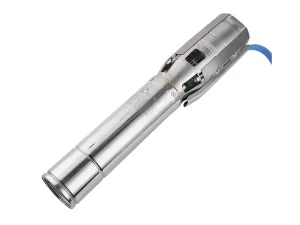
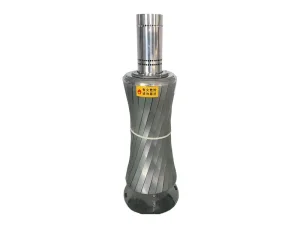
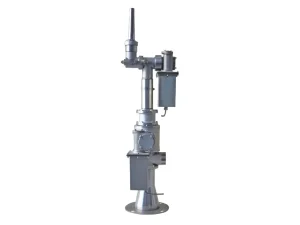
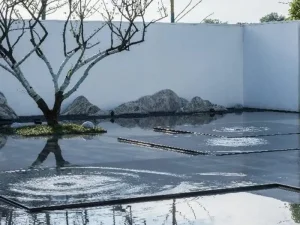
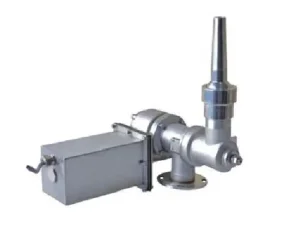
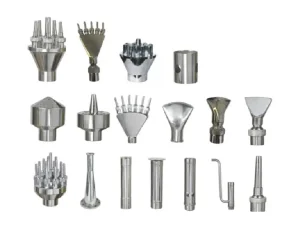
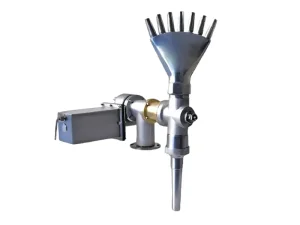
High-Performance Fountain Actuation & Optical Equipment
Precision servo pumping units, multi-axis robotic nozzles, and architectural display apparatus for world-class aquatic installations.
Certified Manufacturing & Contracting Credentials
Bolier holds industry certifications validating design safety, electromechanical precision, and large-scale public project readiness.
Special Grade Certification
Highest qualification tier granted by the China Fountain Landscape Association for engineering scale, safety, and operational excellence.
Municipal Works Grade 3
Licensed general contractor authorized for large-scale municipal infrastructure, public squares, and civic park water installations.
Mechanical & Electrical Grade 3
Certified general and specialized qualifications in mechanical systems, hydraulic pipeline layout, and electrical safety integration.
Urban & Road Lighting Grade 3
Government-licensed specialty contractor for urban architectural lighting, environmental nightscapes, and road lighting engineering.