
High-Precision Hydro-Dynamic & Fire Motion Control Equipment
Executive Summary: The Evolution of Dual-Element Outdoor Water Fire Features
In modern architectural and landscape design, the fusion of opposing natural elements—liquid hydro-dynamics and thermochemical combustion—has emerged as the pinnacle of experiential luxury and commercial visual identity. Outdoor water fire features are no longer isolated decorative basins; they are complex, synchronized cybernetic installations engineered to captivate audiences, elevate commercial property valuations, and serve as central visual anchors for municipal plazas, luxury resorts, and high-end entertainment hubs globally.
Global Commercial Sourcing Trends
Hospitality developers across North America, EMEA, and the Middle East are shifting from static decorative fountains to dynamic, multi-sensory waterscapes. Sourcing demands focus on high ROI through extended operational lifespans, low thermal decay, and automated safety compliance.
High-Efficiency China Manufacturing
China's specialized industrial clusters, such as Bolier's advanced engineering facilities in Sichuan, combine full-chain CNC precision machining with proprietary BLE CSN-Fire electronic safety controls, yielding a 40% reduction in total project execution timelines.
Safety & Environmental Compliance
Modern buyers demand certified fail-safe mechanisms including automatic fuel shutoff solenoid valves, optical flame ionization monitoring, and wind-resistant pilot burners certified under CE, UL, and CSA international safety standards.
Engineering Dual-Element Fire & Water Systems
Integrating open gas flames with recirculating water features presents extreme thermodynamic and mechanical challenges. Below is an engineering overview of the mechanical, electrical, and hydraulic isolation systems required to construct robust outdoor fire and water installations.
1. Submerged Combustion Baffles & Thermodynamic Isolation
When an gas flame (Propane or Natural Gas) emerges directly through a water jet or over a spilling water weir, thermal conduction threatens to degrade gas manifold seals and disrupt laminar water flow. Premier factory solutions utilize multi-chambered 316L Stainless Steel Heat Exchangers with continuous water jacket cooling.
By maintaining a active thermal barrier between the burning combustion zone (reaching temperatures up to 1,200°C) and the surrounding water reservoir (maintained under 45°C), thermal stress micro-cracking is virtually eliminated, guaranteeing over 50,000 continuous hours of operational lifespan.
Technical Comparison: Conventional vs. Smart Industrial Fire-Water Features
| Engineering Parameter | Standard Decorative Assemblies | Bolier Smart Industrial Assemblies |
|---|---|---|
| Structural Metallurgy | SS304 / Powder-Coated Mild Steel | Passivated Marine-Grade Stainless Steel 316L |
| Ignition & Flame Sensing | Manual Spark / Piezoelectric Probe | BLE CSN-Fire Dual Optical & Flame Ionization Array |
| Flame-Water Synchronization | Asynchronous / Independent Relays | Sub-50ms DMX512 / Modbus RS485 Dynamic PLC Sync |
| Wind Protection Engineering | Unshielded Open Burner (Fails at 15 km/h) | Forced-Air Air-Curtain Vortex (Stable up to 65 km/h) |
| Gas Pressure Automation | Fixed Mechanical Regulators | Automated Proportional Servo Valve Pressure Control |
2. BLE CSN-Fire Intelligent Monitoring Protocol
Safety is the non-negotiable benchmark in commercial outdoor water fire feature manufacturing. Bolier's proprietary BLE CSN-Fire System integrates real-time Bluetooth Low Energy telemetry directly into the core PLC cabinet.
- Zero-Latency Flame Dropout Sensing: If wind or water splash extinguishes the pilot, gas flow is cut within 0.3 seconds via dual-redundant solenoid safety valves.
- Automatic Fuel Pre-Purge Cycle: Blowers evacuate residual unburnt gas from manifolds prior to ignition, preventing dangerous pressure spikes or flare-ups.
- SCADA & Smart Building Integration: Native support for Crestron, AMX, and industrial Modbus interfaces enables centralized monitoring across expansive commercial properties.
The China Manufacturing Advantage: Efficiency, Precision & Scale
As global procurement teams seek high-performance architectural features without cost overruns, China’s advanced fountain and water show manufacturing infrastructure delivers unparalleled value. By standardizing component production while offering full custom OEM/ODM flexibility, Chinese factories eliminate middleman markups while enforcing world-class quality standards.
5-Axis CNC Precision Machining
Proprietary nozzle orifices and dynamic swing gears are machined in-house to tolerances within ±0.01mm. This extreme precision ensures perfectly balanced water pressure distribution and uniform flame dispersion across massive multi-nozzle manifolds.
Special Grade Qualification & QA
Bolier holds the Special Grade Certification from the China Fountain Landscape Association alongside Grade 3 Municipal, Mechanical & Electrical Contracting Licenses. Every product undergoes 72-hour continuous hydro-pressure and flame endurance stress testing.
Integrated Supply Chain Ecosystem
From raw marine-grade stainless steel casting to custom PCB assembly for CSN-Fire control cards, our integrated industrial ecosystem reduces raw material procurement overhead and accelerates custom prototype turnaround times to under 14 calendar days.
Commercial Application Scenarios & Architectural Concepts
Custom outdoor water fire features serve distinctly tailored objectives across high-value real estate sectors. Engineering designs are adapted to match environmental constraints, foot traffic density, and site-specific aesthetic goals.
1. Luxury Resort Portals & Infinity Pools
Key Requirement: Whispering quiet hydraulic pumps, zero gas smell, seamless rim-flow weir integration.
Engineering Approach: Submerged gas burner rings anchored inside peripheral infinity edges. Flames appear to float naturally on the water surface, creating unforgettable sunset backdrops for guests without obscuring ocean horizons.
2. Urban Mixed-Use Commercial Plazas
Key Requirement: High wind resistance, child-safe dry deck barriers, automated schedule controls.
Engineering Approach: High-burst pneumatic water nozzles paired with high-velocity air-shrouded fire heads. Integrated wind anemometers automatically scale down flame height during high-wind events to protect pedestrians.
3. Casino Entrances & Night-Economy Icons
Key Requirement: Maximum visual impact, synchronized audio-visual shows, high-frequency fire bursts.
Engineering Approach: Multi-axis CNC swing equipment combined with explosive gas ignition systems (BLE CSN-Fire), capable of launching 10-meter fireballs synchronized to musical beats in under 20 milliseconds.
Future Trends in Water-Fire Feature Engineering
As environmental regulations tighten and smart city infrastructure matures, water and fire manufacturing is experiencing rapid technical innovations. Top manufacturers are pioneering green fuels, AI-driven predictive telemetry, and hyper-dynamic energy management systems.
Eco-Bioethanol & Hydrogen Blends
To support carbon-neutral commercial developments, factories are developing high-efficiency bio-ethanol atomizers and green hydrogen-propane combustion burners that deliver radiant yellow-orange flames without carbon soot or toxic particulates.
IoT Telemetry & Predictive Diagnostics
Cloud-connected PLC cabinets continuously analyze pump vibration, valve cycles, gas pressure drops, and nozzle clogging risks. Maintenance alerts are pushed directly to facility engineering teams before operational downtime occurs.
Sub-Centimeter Dynamic Servo Actuation
Replacing basic pneumatic valves, multi-axis servo actuators allow micro-stepping water jets and fire heads to execute complex wave patterns, fluid geometry, and biological movement profiles synced to symphony performances.
Global B2B Sourcing & Procurement Guidelines
When procuring custom water and fire feature systems from overseas manufacturers, project managers must verify critical engineering metrics to ensure smooth installation, long-term compliance, and operational safety.
Manufacturer Verification Checklist for EPC Contractors:
- Material Certification: Demand spectral analysis reports proving SS316L metallurgy for underwater manifolds, preventing premature corrosion in chlorinated or saltwater pools.
- Electrical & Gas Safety Certifications: Confirm panel assemblies carry CE (EN 60598 / EN 60335) or UL listings, with IP68 waterproof ratings on all submerged fittings and sensors.
- Factory Acceptance Testing (FAT): Require high-definition video documentation of dry-runs, pressure decay tests, and flame-sync trials prior to export packing and shipping.
- On-Site Commissioning Support: Ensure the factory provides certified electro-hydraulic engineers for remote or on-site commissioning, programming, and local maintenance training.
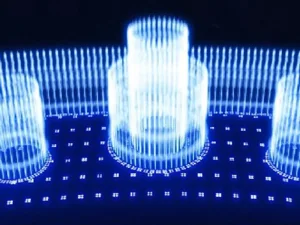
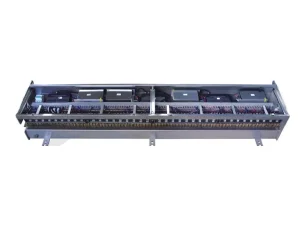
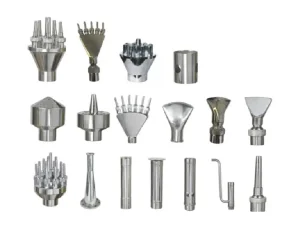
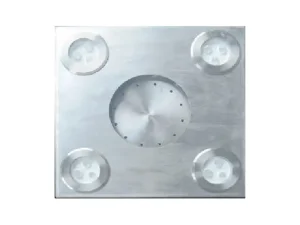
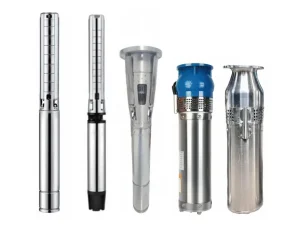
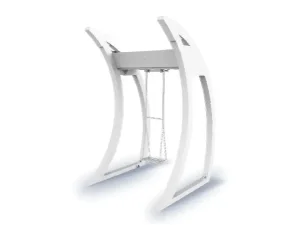
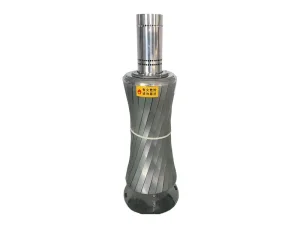
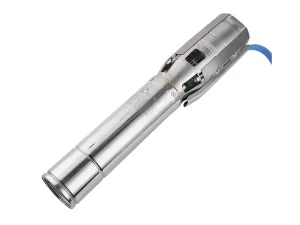
Integrated Musical Fountains, Pumps & Safety Equipment
Frequently Asked Questions (FAQ)
Detailed technical and commercial answers to assist B2B buyers, landscape architects, and procurement teams during project planning.
How do outdoor water fire features handle water intrusion into gas burners?
Commercial-grade systems utilize engineered gas manifold check valves combined with continuous positive-pressure pilot air chambers. Even when submerged or exposed to heavy water cascades, air blowers maintain positive outward pressure through the burner ports, completely preventing water from entering gas supply lines. Furthermore, automated water-drain catch basins sit beneath burner plates to evacuate residual moisture instantly upon shutoff.
What are the electrical and fuel supply requirements for custom fire-water features?
Electrical power requirements range from standard 220V single-phase (for compact residential/commercial units) to 380V/415V 3-phase power for large-scale municipal displays powering high-head servo submersible pumps and high-output ignition blowers. Fuel lines can be configured for Liquid Propane (LP) or Natural Gas (NG) with supply pressures calibrated between 0.5 PSI to 5 PSI depending on desired flame height (0.5m up to 10+ meters).
What failsafe systems protect against flame extinction in high wind conditions?
Bolier's CSN-Fire systems employ dual flame sensing technology: UV optical sensors combined with flame ionization probes. If wind extinguishes the flame, the sensor signals the PLC within 300 milliseconds to trigger an immediate automatic re-ignition spark sequence. If ignition fails after 3 consecutive attempts (within 3 seconds), the main gas solenoid valve shuts off automatically, accompanied by a purge blower cycle to safely dissipate gas.
Can Chinese water fire equipment be integrated with overseas DMX512 or BMS control networks?
Yes. All control panels manufactured by Bolier are engineered with international open protocols including native DMX512, Art-Net, Modbus RTU/TCP, and dry contact relays. This enables local audio-visual engineers to seamlessly trigger fire ignition and water movements directly from centralized show controllers (such as MA Lighting, Pharos, or Crestron) without custom protocol conversion hardware.
What is the typical lead time for custom OEM/ODM fire-water feature production and delivery?
Custom engineering design, CAD drafting, and 3D fluid/flame simulations are typically completed within 5 to 7 business days. Upon design approval, factory CNC machining, assembly, and 72-hour continuous testing take 15 to 25 calendar days. Ocean freight lead times range from 14 days (Southeast Asia/Middle East) to 28–35 days (North America/Europe).
What maintenance routine is required to maintain long-term hydro-thermal performance?
Routine maintenance involves quarterly inspection of the stainless steel burner orifices for scale buildup (in hard-water areas), checking pilot spark igniter gap clearances (2-3mm), and inspecting underwater cable seals. Because Bolier uses marine-grade SS316L metallurgy and brushless servo pumps, mechanical servicing is minimized, requiring routine water filtration backwashing rather than heavy component replacement.