
An Indoor Water Feature can make a room feel calmer without changing its layout. A small fountain on a side table adds a soft, steady sound. Water catches the light, too, especially near a window. In a compact apartment, that gentle movement can make a quiet corner feel more intentional. It is a modest change, not a cure for stress. Not every home needs one.
The right design depends on the room and the people using it. A tabletop fountain suits a shelf or desk, while a wall-mounted model needs more space and careful installation. Before choosing, check its dimensions, pump noise, splash range, and cleaning instructions. Check the power requirements, too. Keep the feature on a stable, water-resistant surface, and follow the manufacturer’s guidance for electrical safety. Regularly rinsing the basin and replacing water can help limit mineral deposits and stale odors. These are small tasks, but they matter.
There are trade-offs. A pump may hum, water may splash, and evaporation means occasional refilling. And honestly, the upkeep can feel less serene than the water. Those details deserve consideration before buying, especially in homes with curious children or pets. A well-chosen Indoor Water Feature can add texture and a soothing focal point, but it works best when its size, sound, and care routine fit everyday life. It need not be perfect to be worthwhile.
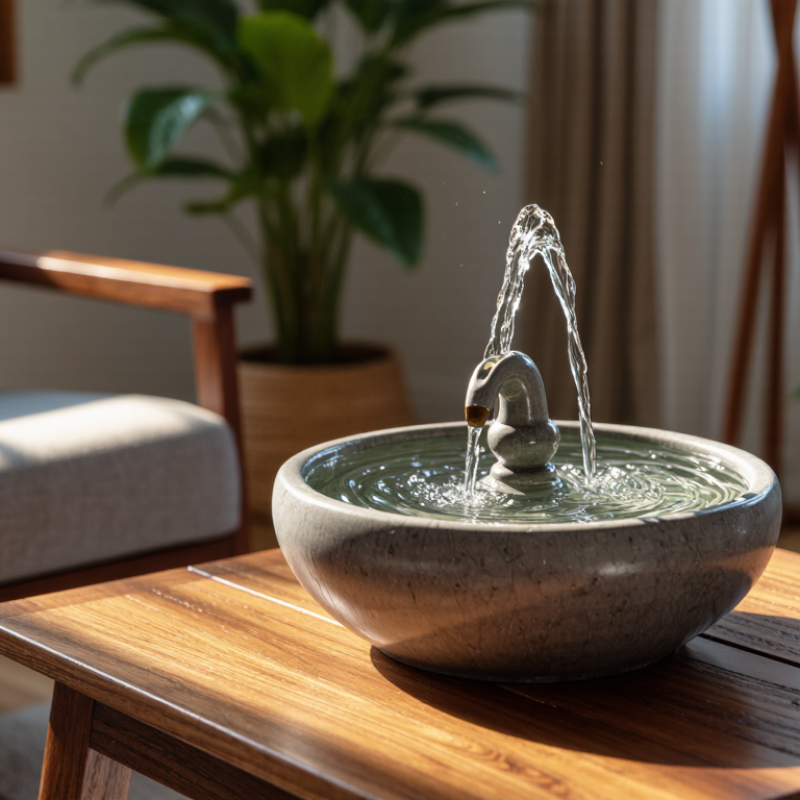
An indoor water feature is a built-in or freestanding system that holds and moves water inside a home. It may be a tabletop basin, a wall-mounted sheet of water, or a small recirculating fountain. Its defining parts include a reservoir, a pump or gravity-fed flow, a stable surface, and a plan for controlling splashes and handling upkeep. The visible stream matters, but so does what stays hidden. A quiet motor, sealed joints, an accessible filter, and an easy-to-wipe basin make the feature more practical. Not every design needs a pump.
The U.S. Environmental Protection Agency’s guide, A Brief Guide to Mold, Moisture and Your Home, recommends keeping indoor humidity below 60%, ideally between 30% and 50%. That range matters because open water can add moisture, especially in a small, poorly ventilated room. A water feature is not a humidifier with guaranteed benefits. Its effect depends on room size, airflow, water surface, and operating time. A simple hygrometer can track humidity; inspect nearby paint, grout, and window edges for dampness. Honestly, maintenance is easy to underestimate. Even a shallow bowl needs regular cleaning and a level, water-resistant base.
Indoor water features range from compact tabletop fountains to tall, floor-standing designs. Tabletop models fit beside a reading chair or on a sturdy console. Their small reservoirs need regular refilling, especially in dry rooms. A soft trickle can be pleasant, but some pumps are more audible than expected.
Wall-mounted fountains save floor space and create a noticeable focal point. Check the wall’s strength and nearby electrical access before choosing one. Freestanding water walls often have broader panels, with water sliding over stone, glass, or metal. They may suit entryways, though splashes and mineral marks can become part of upkeep. Small details matter.
For a more natural look, a planted indoor pond or water garden combines moving water with aquatic plants. These setups need careful attention to light, cleanliness, and moisture around the container. I’ve found that the display can seem effortless, while the maintenance is not. A simple basin fountain may be the better fit for a busy household. Choose a style that matches the room, and leave enough space to refill and clean it without awkward reaching.
| Feature Type | Typical Form and Size | Sound and Water Movement | Space and Placement | Routine Care | Well Suited To |
|---|---|---|---|---|---|
| Tabletop fountain | Compact basin-and-pump design; commonly about 20–45 cm (8–18 in) tall. | Usually a gentle trickle or small cascade. Sound depends on the flow rate and how far water falls. | Fits on a stable table, shelf, or desk near a power outlet; protect surfaces from splashes. | Top up evaporated water regularly, clean the basin, and check the pump intake for debris. | Small rooms, desks, and people who want a portable feature with a modest footprint. |
| Wall-mounted fountain | Panel or wall basin with a recirculating flow; often approximately 60–150 cm (2–5 ft) wide. | Creates a continuous sheet or stream of water; a larger flow can produce more noticeable sound. | Requires a suitable wall, secure mounting, splash control, and access to electricity. Check wall and floor protection needs. | Clean the basin and water-contact surfaces, maintain the pump, and monitor water level. | Entryways, living rooms, or other areas where a vertical focal point is desired. |
| Floor-standing fountain | Freestanding basin, column, or tiered design; commonly around 90–180 cm (3–6 ft) tall. | Ranges from a soft trickle to a more prominent cascade, depending on the design and pump setting. | Needs a level, load-appropriate floor area and nearby power; leave room for cleaning and refilling. | Refill as needed, remove mineral deposits, and periodically clean the pump and basin. | Larger rooms where a substantial, self-contained centerpiece is preferred. |
| Indoor pond or water garden | A shallow basin or purpose-built pond, often customized to the available space. | Can be quiet when still or gently circulating; aeration and waterfalls increase movement and sound. | Requires careful planning for floor loading, waterproofing, humidity, and safe electrical installation. | Needs regular water-quality checks and cleaning; plants or animals, if included, require additional care. | Dedicated indoor garden areas and homeowners prepared for more involved upkeep. |
| Water wall or curtain | Water flows across a vertical surface into a concealed or visible reservoir; sizes vary widely. | A smooth, even flow can create a soft background sound; uneven flow may cause splashing or louder noise. | Plan for a waterproof backing or splash zone, a level reservoir, and accessible pump components. | Keep the reservoir topped up and clean the water surface and flow panel to limit residue or mineral buildup. | Feature walls and open-plan interiors where a clean, contemporary look is wanted. |
| Aquarium with a waterfall or filter flow | Glass tank with a filter-driven water return; tank capacity varies from small desktop sizes to large installations. | Water movement is generally localized around the filter return; sound varies by filter design and water level. | Must stand on a stable, level support rated for the filled tank’s weight and be positioned near suitable power. | Requires regular water testing, filter maintenance, and responsible care for any aquatic life. | People interested in observing aquatic life and willing to maintain a functioning aquarium. |
Choosing tip: Before buying, consider available floor or wall space, access to a power outlet, splash protection, pump noise, refill frequency, and the amount of cleaning you are comfortable doing. Dimensions are typical examples; actual products vary.
Indoor water features change a room through sound, movement, and a little added moisture. A tabletop fountain can soften the sharp quiet of a study, while a narrow wall feature may make a bare entry feel less stark. The trickling sound is often gentle, but its effect depends on the room. In a small bedroom, even a low pump may become noticeable at night. Quiet matters.
Moving water can draw the eye and create a calmer-feeling setting, though it does not guarantee lower stress or better sleep. Placement helps: keep a feature away from televisions, conversation areas, and delicate papers that could be affected by splashes. Check the manufacturer’s care instructions, clean the basin regularly, and refill it as needed; mineral deposits and stagnant water can make a feature less pleasant. Not always. A fountain also adds some moisture to the nearby air, but the amount varies with its size, airflow, and room conditions. In a damp room, monitor humidity rather than assuming more moisture is beneficial. A small detail people sometimes overlook is pump vibration: a stable, level surface can reduce the faint buzz that travels through furniture.
This chart compares estimated annual electricity use for three pump-power scenarios. Values are calculated assuming continuous operation for 8,760 hours per year; they are examples, not a claim about typical products.
Moving water can add a gentle sound and evaporation can contribute moisture to indoor air. Actual effects vary with the feature, room, ventilation, and operating time. Check the pump’s rated power to estimate its electricity use.
When choosing an indoor water feature, start with the room, not the fountain’s appearance. Measure the available floor or wall space, then check how far splashes could reach. A tabletop piece may suit a small study, while a larger basin needs a stable, level surface. Water adds weight. Confirm that the floor and stand can support the filled feature, especially in older homes. Also consider nearby outlets and keep cords away from wet areas. If the installation needs new wiring, ask a qualified electrician.
Listen before you buy. A gentle trickle can soften room noise, but a pump may hum more noticeably in a quiet bedroom. Ask whether its flow and sound can be adjusted. Check how the basin opens, how often water needs refilling, and whether the pump can be reached for cleaning. Hard water may leave pale mineral marks on dark stone or glass. That detail is easy to miss. Pets and young children may also need a barrier or a safer placement. A feature that looks calm in a showroom can feel distracting beside a reading chair; the right choice may take a little trial and adjustment.
Why Choose an Indoor Water Feature for Your Home?
An indoor water feature can soften room noise and add gentle movement to a quiet corner. Installation matters, though. Choose a level, sturdy surface that can support the feature when its basin is full. Place it where splashes will not reach rugs, books, or nearby electronics. Before filling it, check that the basin, tubing, and pump connections fit securely. A tiny leak can become a surprisingly large chore.
Water and electricity need careful separation. Ask a qualified electrician to check that the outlet and circuit are suitable for the location. Avoid trailing extension cords across floors, and follow the feature’s safety and setup instructions. Keep the pump covered with water as directed; running it dry may cause damage. For upkeep, remove dust and mineral deposits regularly, refresh the water, and inspect the pump for reduced flow or unusual noise. The sound can feel calming by day, then oddly loud at night. I would test the placement before settling on it.
Tips: Keep a small towel nearby during filling and cleaning. Check the floor beneath the feature after its first day, then inspect it weekly. If you notice a persistent leak, unplug the unit safely and resolve the cause before using it again.
Options include tabletop fountains, wall-mounted designs, freestanding water walls, planted indoor ponds, and simple basin fountains. Small details matter.
Measure the floor or wall space before choosing. Leave room to refill and clean the feature without awkward reaching.
Use a level, sturdy surface that can support the filled basin. Keep splashes away from rugs, books, and electronics.
A gentle trickle may soften room noise, but some pumps hum more than expected. Test the sound near a reading chair or bedroom.
Refresh the water, remove dust and mineral deposits, and check the pump regularly. Small tabletop reservoirs may need frequent refilling in dry rooms.
Check the basin, tubing, and pump connections before filling. Inspect the floor after the first day, then check it weekly.
Keep cords away from wet areas and avoid extension cords across floors. Ask a qualified electrician to check the outlet if needed.
Consider a barrier or a safer placement. A calm-looking basin can still invite curious hands or paws; I would think that through twice.
An Indoor Water Feature can add movement, gentle sound, and a sense of calm to a home. These features range from compact tabletop fountains and wall-mounted designs to larger floor models and small indoor ponds. Each option creates a different visual effect, so the right choice depends on the room’s size, style, available space, and desired level of sound and upkeep.
Before choosing, consider the feature’s materials, water capacity, power needs, humidity, and whether its placement is suitable for nearby floors and furnishings. Follow the manufacturer’s installation guidance, use a stable location, and keep electrical connections away from water. Regularly refresh and clean the water, remove buildup, and check the pump to help maintain reliable operation. With thoughtful selection and routine care, an indoor water feature can become a practical, soothing addition to a living space.
