
What Are the Top Types of Indoor Waterfall Features?
An Indoor Waterfall Feature can turn a quiet corner into a room’s visual and acoustic focal point. The right style depends on more than appearance. Consider the wall or floor space, nearby seating, available power, splash control, and the sound you want. A narrow wall-mounted cascade may suit a small entryway, while a freestanding column can bring movement to a larger living room. Tabletop fountains offer a compact option, though their effect is gentler.
Materials shape the mood. Clear glass can make flowing water feel light; dark stone gives it a more grounded presence. Some designs use a thin sheet of water, while others guide it over textured surfaces. Listen closely. A soft trickle may calm a reading nook, but a louder flow can compete with conversation. Maintenance matters, too: mineral marks and algae can appear when cleaning is overlooked. It is easy to underestimate that part.
A useful design principle is, “Let the water fit the room, not dominate it.” I can’t responsibly attribute this line to a named industry expert because no source article or verifiable quotation was provided. Add a sourced expert quote before publication. The guide ahead explores wall-mounted, freestanding, tabletop, and other popular indoor waterfall types, with attention to their appearance, placement, sound, and practical upkeep.
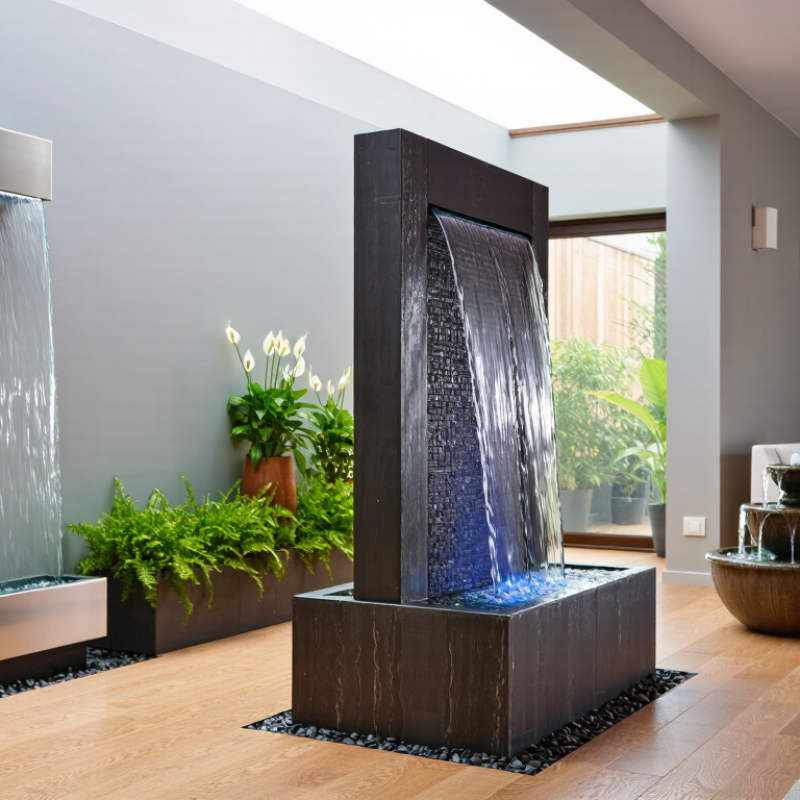
Wall-Mounted Indoor Waterfall Features
Wall-mounted indoor waterfall features bring moving water into a room without taking up floor space. Most combine a slim panel, a collection basin, and a small recirculating pump. Water can flow over glass, slate, textured stone, or metal, creating different sounds and reflections. Glass often gives a brighter, cleaner look, while rough stone breaks the flow into softer, uneven lines. The effect is immediate. Still, leave visual breathing room around the panel; a crowded wall can make even a compact feature feel intrusive.
Before choosing a model, check the wall structure, splash control, and access to a safe power supply. Some designs may also need plumbing, depending on how they refill. A built-in reservoir usually requires occasional topping up as water evaporates. Hard water can leave pale mineral marks, especially on dark surfaces, so plan for routine cleaning. Use a water-resistant backing and protect nearby flooring from stray droplets. A qualified installer can assess the wall and moisture risks. Pump noise matters in a bedroom or small office. It is easy to underestimate that. If possible, view a working unit in person; photographs rarely reveal its true flow or sound. The first layout may not be the best one.
What Are the Top Types of Indoor Waterfall Features? — Wall-Mounted Indoor Waterfall Features
| Feature Type | Typical Surface | Water Pattern and Appearance | Space and Wall Considerations | Cleaning and Upkeep | Often Suited To |
|---|---|---|---|---|---|
| Glass-panel waterfall | Clear, frosted, or textured glass | Water forms a thin sheet across the panel, creating a smooth, reflective look. | Usually has a relatively shallow profile, but the wall and mounting system must support the filled unit. | Glass shows mineral spots and fingerprints; regular wiping and water-quality maintenance help keep it clear. | Modern interiors, reception areas, and rooms where a reflective surface is desired. |
| Stone or slate waterfall | Natural or manufactured stone, often with a textured face | Water follows the surface irregularities, producing a varied flow and a natural stone appearance. | Stone can be heavy, so the supporting wall, anchors, and installation method need appropriate assessment. | Textured surfaces can collect deposits; cleaning access and water treatment are useful considerations. | Interiors with natural materials, textured finishes, or a more organic visual style. |
| Metal-panel waterfall | Metal sheet or formed metal panel | Water runs over a smooth or patterned surface, with the final effect depending on the panel design. | Panel weight and resistance to moisture vary by metal and construction; check mounting requirements. | Care depends on the finish. Use cleaning methods suitable for the specific metal to avoid surface damage. | Contemporary spaces seeking a clean-lined feature with a durable-looking finish. |
| Acrylic or resin waterfall | Manufactured acrylic or resin panel | A smooth face can create an even water film; tinted or shaped panels offer different visual effects. | Often lighter than stone, though the complete unit still needs secure support and a suitable water reservoir. | Soft cloths and non-abrasive cleaners help reduce scratching; inspect the surface for buildup. | Projects where a lighter panel material or a range of colors and shapes is preferred. |
| Waterfall with a planted wall | Growing medium or planting modules combined with a water-delivery surface | Water is integrated with live greenery; the visible flow depends on the system design. | Requires space and support for the plants, irrigation components, drainage, and moisture protection. | Requires plant care as well as regular checks of irrigation, drainage, and water circulation. | Interiors designed to combine greenery with a water feature, provided suitable light and maintenance are available. |
| Framed wall-mounted waterfall | A framed panel using glass, stone, metal, or another compatible facing | The frame defines the feature’s outline, while the facing determines the water pattern and finish. | Installation needs room for the reservoir, pump, plumbing, and access for servicing; wall requirements vary by unit. | Maintenance depends on the facing and internal components; make sure the pump and reservoir can be reached. | Homes or commercial interiors where a contained, clearly defined wall feature is desired. |
FAQS
No. They use a wall panel, basin, and recirculating pump, leaving the floor clear.
Glass creates a bright, thin veil. Rough stone breaks the flow into softer, uneven lines.
Check the wall structure, waterproof backing, splash control, and access to safe power. Some designs may also need plumbing.
Use a catch basin and protect the floor from stray droplets. Keep the water path controlled.
Top up the reservoir as water evaporates, and wipe mineral marks from the surface. It is not maintenance-free.
Yes. A poorly isolated or undersized pump may hum. Listen to a working unit if possible.
Glass can show pale mineral marks, while metal finishes may reveal water spots or develop a patina. Keep a cloth nearby.
Try warm-toned lighting or nearby natural stone. The first layout may still feel too cold; photos rarely show the full effect.
Conclusion
An Indoor Waterfall Feature can bring movement, sound, and visual interest into many kinds of spaces. Wall-mounted designs make use of vertical surfaces, while freestanding waterfalls can define areas or serve as room dividers. For smaller rooms, tabletop and compact options offer a water-inspired focal point without requiring much floor space. Each type can suit a different layout, scale, and decorative style.
Materials and settings also shape the overall effect. Architectural glass and metal designs tend to create a clean, contemporary look, while naturalistic rock and pond waterfalls evoke a more garden-like atmosphere. When choosing among these types, consider the available space, the desired visual style, and how the feature will fit into the room’s everyday use.
