
China’s fountain industry serves projects ranging from hotel courtyards to civic plazas, where pump reliability, nozzle precision, and lighting control matter as much as visual impact. The National Bureau of Statistics reported that China’s urbanization rate reached 67.00% in 2024, with 943.5 million people living in urban areas. That scale helps explain the country’s extensive landscape and public-space supply chain, but it does not prove that every manufacturer has export-ready expertise.
For buyers researching International Fountains, supplier claims need careful checking. China Customs reported goods exports of RMB 25.45 trillion in 2024, reflecting the country’s broad export capacity—not fountain-specific performance. A high export figure is not a quality certificate. This distinction is easy to overlook.
A useful supplier shortlist should compare documented project experience, material specifications, water and electrical system details, customization capabilities, and after-sales support. Request drawings, component lists, test records, and references for installations similar to your project. Look closely at details: stainless-steel grade, pump brand, control-panel protection, and spare-parts availability. Public sources rarely provide a transparent, independently verified ranking of Chinese fountain suppliers, so any “top” list should be treated as a starting point, not a final verdict. Real-world performance can vary. The sections ahead examine how to assess leading candidates and verify what their sales materials promise.
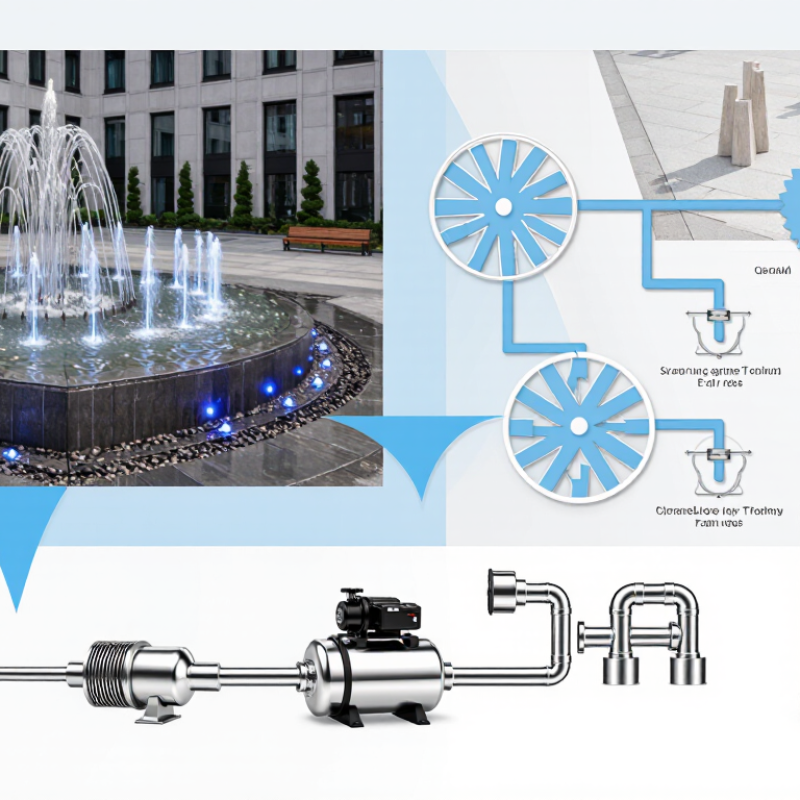
An international fountain supplier in China is more than a workshop that builds pumps and nozzles. It can translate a project brief into practical drawings, equipment lists, and installation guidance. The team should understand water flow, pump sizing, filtration, lighting, and materials that withstand constant moisture. For example, it should explain how a nozzle behaves in wind, not just quote its height. Details matter. Clear answers about testing and maintenance help buyers judge whether a design will work beyond the showroom.
International readiness also means communicating across time zones and providing accurate technical documents. A dependable supplier can share drawings, packing details, operating instructions, and realistic production schedules. It should explain what is included, what requires local coordination, and how spare parts can be identified. Ask how the system is tested before shipment, and request evidence such as inspection records or project references. Even a capable supplier may need time to clarify an unusual site condition; honest uncertainty is better than a quick promise. No checklist is perfect. Good judgment still matters.
Evaluating leading Chinese fountain suppliers means checking how their designs perform beyond showroom lighting. Price alone proves little. On a site visit, inspect pump noise, water clarity, nozzle consistency, and access to filters. Small details matter. Ask for material specifications, pump curves, wiring diagrams, and maintenance schedules. These documents reveal whether a supplier understands long-term operation, not just fabrication.
UNESCO’s 2024 World Water Development Report estimates that global water demand has increased by about 1% annually over the past four decades. That trend makes recirculation, leak control, and practical water treatment worth examining. The figure is global, not fountain-specific. Still, it gives buyers a reason to ask how suppliers limit avoidable water loss. Request a running demonstration and observe whether spray height stays stable as several zones operate together.
For energy use, compare pump selections with the actual flow and head requirements. The U.S. Department of Energy’s Pumping Systems guidance recommends assessing the whole system, rather than relying on a motor’s rated efficiency alone. Ask for test records and clear warranty terms. Check spare-part availability, packaging, and export documentation, too. A polished sample can hide weak after-sales planning; I have seen buyers overlook this. Factory audits help, but they cannot guarantee flawless installation or future service.
Use this evidence-based scorecard to compare suppliers for international fountain projects. It evaluates capabilities and documentation rather than naming or ranking individual companies.
| Evaluation Dimension | Weight | What to Assess | Evidence to Request | Scoring Guidance |
|---|---|---|---|---|
| Relevant Project Experience | 15% | Experience with comparable fountain types, project scale, site conditions, and export markets. | Project references, dated project records, scope descriptions, and client contacts where permission is available. | Score higher when references are verifiable and closely match the proposed project’s technical and operating requirements. |
| Engineering and Design Capability | 15% | Hydraulic calculations, pump selection, pipe sizing, nozzle layouts, electrical coordination, and design documentation. | Sample drawings, equipment schedules, calculation methods, design review process, and revision records. | Score higher for coordinated, project-specific engineering with clear assumptions and documented review stages. |
| Manufacturing and Quality Control | 15% | Production controls, inspection stages, traceability, material verification, and testing before shipment. | Quality procedures, inspection and test plans, sample inspection records, material certificates when applicable, and factory audit access. | Score higher when checks are documented, repeatable, and linked to the supplied equipment and project specifications. |
| Hydraulic System and Equipment | 15% | Pump and nozzle suitability, filtration, valves, pipework, water-quality provisions, and system maintainability. | Equipment data sheets, hydraulic diagrams, pump curves, operating requirements, and maintenance instructions. | Score higher when equipment selection is supported by calculations and the system is designed for the site’s water and operating conditions. |
| Controls, Lighting, and Integration | 10% | Control-system functions, show sequencing, lighting integration, interface requirements, and operational flexibility. | Control architecture, input/output lists, sequence descriptions, lighting specifications, and interface documentation. | Score higher for clearly documented functions, defined interfaces, and a demonstration or factory test plan. |
| Installation and Commissioning Support | 10% | Installation planning, site coordination, commissioning procedures, operator handover, and training. | Installation scope, commissioning checklist, staffing plan, training materials, and division of responsibilities. | Score higher when site responsibilities, schedule assumptions, acceptance tests, and handover deliverables are explicit. |
| Safety and Regulatory Documentation | 10% | Electrical and water-related safety provisions, applicable market requirements, and product documentation. | Risk assessments, wiring and grounding details, equipment declarations or test reports where applicable, and manuals. | Score higher when documentation is relevant to the destination market and claims can be independently checked. |
| After-Sales Service and Spare Parts | 5% | Technical response arrangements, spare-parts availability, warranty terms, and troubleshooting support. | Written warranty, service contact process, recommended spare-parts list, and response-time commitments. | Score higher for clear written terms and practical support arrangements for the project’s location. |
| Commercial and Delivery Transparency | 5% | Scope clarity, exclusions, payment milestones, delivery assumptions, packaging, and change-control process. | Itemized quotation, scope matrix, delivery schedule, shipping terms, and written variation procedure. | Score higher when costs, responsibilities, assumptions, and potential extra charges are stated clearly. |
| Total Weight | 100% | Apply the same criteria and evidence requirements to every supplier being considered. | ||
Scoring method: Rate each dimension from 1 to 5 (1 = insufficient evidence or capability; 3 = acceptable, documented capability; 5 = strong, verifiable evidence). Calculate each weighted result as: rating ÷ 5 × dimension weight. Request comparable documents from all bidders before using the score to support a purchasing decision.
Chinese fountain suppliers serving global markets are often manufacturers with in-house engineering, fabrication, and export coordination. They may supply complete systems, including pumps, nozzles, lighting, control cabinets, and installation drawings. Some also adapt designs to site dimensions, water conditions, climate, and local power requirements. A supplier’s export experience matters: ask for project references, material specifications, test records, and clear documentation in your working language. A polished catalog is not proof of reliable delivery.
Tips: Request a component list and a written scope of supply. Confirm who handles packing, shipping documents, installation guidance, and after-sales support. Ask for recent project photos with dates and locations. Small details matter.
For overseas projects, compare suppliers on engineering communication, quality checks, spare-part availability, and realistic lead times—not price alone. A video call reviewing drawings can reveal whether the team understands the site constraints. Request a factory inspection or a documented pre-shipment test when practical. Coordination can still be imperfect, especially across time zones, so keep decisions and revisions in writing. A dependable partner should explain limitations plainly and flag risks before production begins.
This chart provides market context for assessing Chinese fountain suppliers; it shows China’s overall goods exports, not fountain-specific sales or individual supplier performance. Figures are rounded, in trillion yuan, based on 2023 data from China’s General Administration of Customs.
International fountain suppliers in China typically provide complete water-display systems, not just decorative nozzles. Packages may include stainless-steel or brass nozzles, pumps, filtration units, LED lights, control panels, and pipework. Some suppliers build compact indoor features; others fabricate large outdoor assemblies. Product choice depends on water depth, basin size, power access, and local climate. Small details matter.
Many suppliers also offer project services, such as concept drawings, hydraulic calculations, equipment schedules, 3D layouts, and factory testing before shipment. For custom projects, buyers should request material grades, pump curves, wiring diagrams, and clear installation instructions. Remote technical support may help contractors connect equipment and adjust spray patterns. But it cannot replace a site inspection. That distinction is easy to miss.
After-sales support varies. Some suppliers provide spare-parts lists, troubleshooting guidance, and commissioning advice; on-site installation may require a separate agreement. Ask how packaging protects pumps and lights during long transit, and confirm which documents accompany each shipment. A low price can leave gaps in controls or service. Compare the drawings with the equipment list before approving production; even careful teams can overlook a small fitting.
When comparing international fountain suppliers in China, start with the project brief, not the sales brochure. Share the pool dimensions, water depth, wind exposure, and local water conditions. Ask each supplier for a layout drawing, pump schedule, and clear nozzle specifications. Details matter. A technically sound proposal should explain how pumps, filters, lighting, and controls work together.
Compare materials and service access, not just the quoted price. Request the grade and thickness of stainless steel, plus details on seals and underwater cables. Ask how the system handles mineral deposits and routine cleaning. Ask for evidence, not promises. Recent project references, factory inspection records, and sample commissioning documents can help verify experience. A video alone may not reveal maintenance problems.
Check what the price includes: control cabinets, packing, shipping, installation guidance, and spare parts. Confirm response times and warranty exclusions in writing. One gap is easy to miss: the supplier may provide equipment but not local installation. Clarify who tests water pressure, adjusts the spray height, and trains operators. Compare at least two proposals against the same specification. If a quotation is unusually low, ask which components or services were left out. I would also request a simple maintenance plan, even when the project seems small.
Look for in-house engineering, fabrication, and export coordination. Ask for recent project references, material specifications, and test records. A polished catalog proves little.
A package may include pumps, nozzles, filters, LED lights, control panels, and pipework. Confirm every component appears on the equipment list. Small details matter.
Some suppliers prepare concept drawings, hydraulic calculations, 3D layouts, and equipment schedules. They may also test systems before shipment. Remote guidance helps, but cannot replace a site inspection.
Provide pool dimensions, water depth, wind exposure, water conditions, and available power. These details help suppliers specify pumps and spray patterns. I would double-check measurements; an overlooked depth can change the design.
Compare nozzle specifications, pump schedules, material grades, and service access. Request stainless-steel thickness, seal details, and underwater cable specifications. Ask for evidence, not promises.
Request dated project photos, factory inspection records, and commissioning documents. A video call reviewing drawings can reveal how well the team understands site constraints. It is not foolproof.
Check whether it covers control cabinets, packing, shipping documents, installation guidance, and spare parts. Confirm who handles local installation and operator training. A low price may leave gaps.
Ask about spare-parts availability, troubleshooting, commissioning advice, response times, and warranty exclusions. Request a simple maintenance plan, even for a small feature. Plans can still miss things.
Choosing a top international fountain supplier in China involves more than comparing prices. Buyers should look for proven experience serving overseas projects, clear communication, dependable production, and the ability to adapt designs to a site’s size, style, and operating needs. Strong suppliers can explain their materials, manufacturing processes, quality checks, delivery arrangements, and after-sales support. They should also provide clear project information so buyers can assess whether the proposed solution fits their requirements.
Chinese suppliers serving global markets may offer a range of products, from decorative water features to coordinated fountain systems, along with design assistance, installation guidance, and maintenance support. When comparing options, buyers can review relevant project experience, product specifications, customization capabilities, timelines, service terms, and the clarity of quotations. A careful evaluation helps identify a partner capable of delivering International Fountains that meet both aesthetic goals and practical expectations.
